
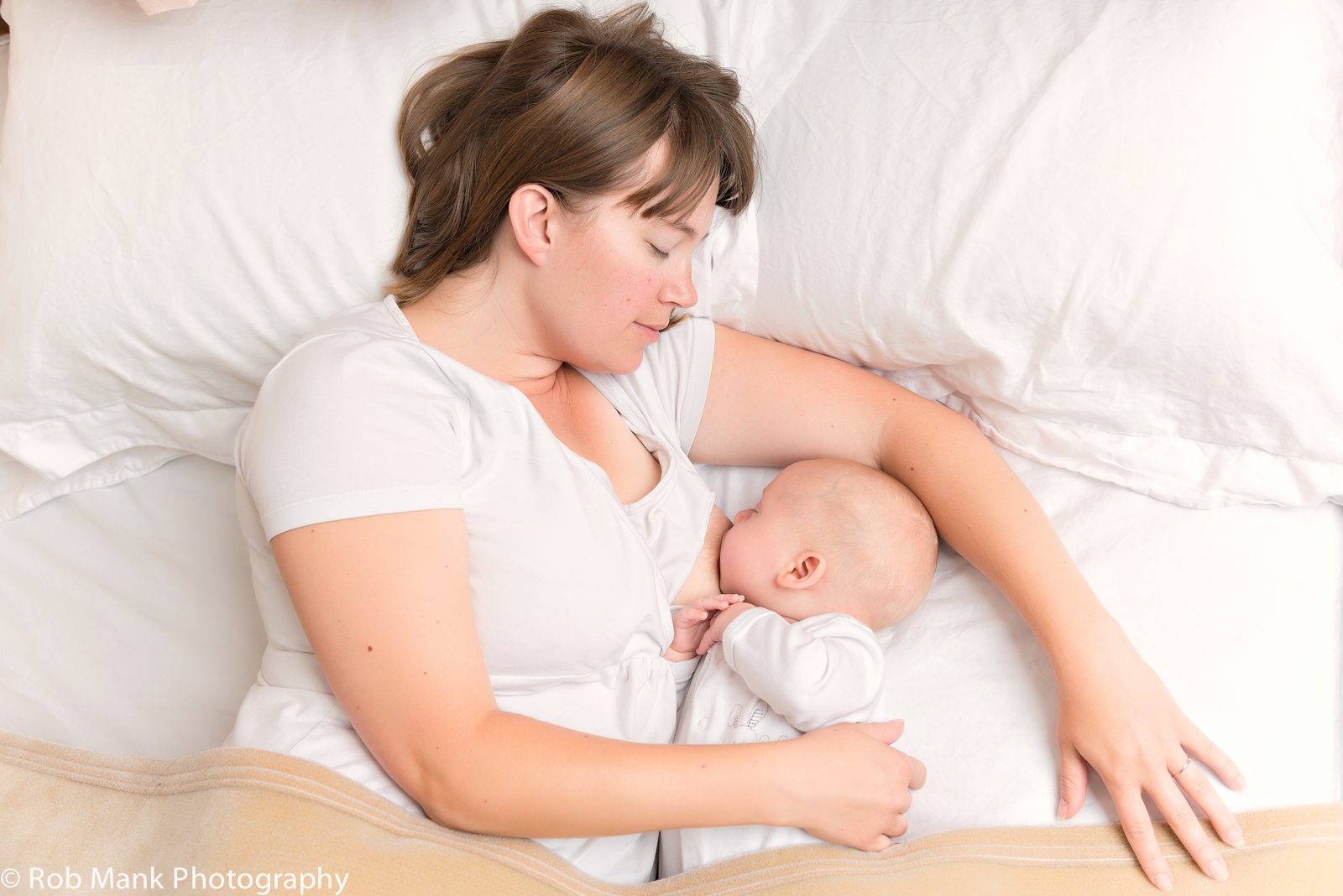
Your baby has no idea where she is
When your baby is first born she has no sense of space, time of day or place. She has spent the best part of nine months in a warm, moist uterus with constant food, constant low-level noise, and being rocked to sleep for most of it.
Now she has no idea how to cope with her new surroundings. The only way she knows to communicate is to cry — and when she does, she knows she will be picked up, cuddled or fed.
Why days and nights are the wrong way around
Almost every newborn has her days and nights the opposite way to what her parents expect. Babies do not have an adult circadian rhythm; they tend to be more restful in daylight and more wakeful at night.
There is a simple reason. Through pregnancy, while you were upright and moving, you rocked her to sleep. At night, when you lay down and relaxed, she woke up and got busy. She simply continues that pattern once she is born.
Night feeding is doing real work
Prolactin, your lactation hormone, is at its highest concentration at night and in the early morning. Your baby needs to feed regularly — at least every two to three hours, day and night in the first six weeks — and those night feeds are vital for your supply.
Oxytocin does the milk removal and the let-down. It is often called the love hormone, and both of you benefit: every feed helps you feel relaxed and helps you get back to sleep more quickly and deeply.
Night milk is different milk
There are molecules in breast milk that seem optimised to help babies sleep at night. Leptin, which suppresses appetite, peaks around midnight. Melatonin and histidine are highest in the middle of the night, and both promote sleepiness. Tryptophan, needed to make melatonin, is highest at night too.
Researchers have found night-time melatonin levels up to five times higher than daytime levels (Katzer et al, 2016). In other words, your breastfed baby is receiving signals that minimise hunger and help her sleep.
Where your baby sleeps
Some women choose to co-sleep because it makes frequent night feeding easier without becoming fully awake. The SIDS foundation recommends having your baby close by, but in her own bed.
If you do not smoke, do not use dangerous drugs, do not drink alcohol, you do breastfeed, and your partner also does not smoke, drink or use drugs, you may find co-sleeping works for you. Talk it through with your Midwife rather than deciding at 3am.
Babies do not sleep like adults
Dr Helen Ball's research on safe sleep and sleep patterns found that babies sleep very differently from their parents: not exclusively at night, not all night, falling asleep differently, with shorter sleep cycles and far more REM (Ball, 2014).
Every baby is different, even within the same family, but most newborns need around twenty hours of sleep a day, taken in two to three hour bouts. With a sleep cycle of roughly forty-five to sixty minutes, most will stir and begin to wake — and may well go back down for a second cycle with a little comfort, rocking, music or white noise.
It will not always be like this
Whatever strategies you choose for the nights, know that your baby will not be like this forever. She will mature, stretch out her feeds, take less and less time to feed and settle, and learn the difference between day and night. You will start to feel more like yourself as time goes by.
Be patient with both of you. Rest during the day, ask family and friends to take on the house so you can focus on your baby, turn your phone off, keep screens down, eat well and often, keep your fluids up, and get to bed early — especially in the early weeks.
Take care, and please ask if you would like more guidance and help.
— Penny